Livelihood Development as a Pathway to Economic Empowerment
Creating livelihoods to build empowered communities
Livelihood development is central to sustainable rural transformation, particularly in regions where agriculture remains the primary source of income. For marginal and small farmers, livelihoods are often constrained by limited landholdings, declining soil fertility, rising input costs, and increasing vulnerability to climate change. These structural challenges not only affect agricultural productivity but also reduce income stability and long-term economic resilience.
Over the past few decades, while agricultural output has improved in certain areas, the excessive use of chemical fertilizers and unsustainable practices has adversely impacted soil health and ecological balance. At the same time, market uncertainties and fragmented value chains have further reduced profitability for farmers. Addressing these issues requires a comprehensive, system-driven approach that integrates productivity enhancement, cost optimization, and sustainable practices.
Recognizing these challenges, BMSS (Berojgar Mahila Sewa Samiti) has developed a structured livelihood development program aimed at strengthening the economic foundation of rural communities. The organization focuses on enabling farmers to adopt scientific, sustainable, and market-oriented agricultural practices that lead to improved productivity, reduced costs, and increased income.
BMSS Vision
Vision & Objectives in Livelihood Development
BMSS envisions a resilient rural ecosystem where farmers are empowered with knowledge, skills, and access to resources necessary for sustainable livelihood generation. The organization aims to transform traditional agriculture into a more efficient, productive, and profitable system that supports long-term economic growth.
The primary objective of BMSS’s livelihood development initiatives is to enhance the income and productivity of marginal and small farmers through the adoption of improved agricultural practices. This includes promoting scientific farming methods, strengthening linkages with government schemes, and building farmers’ capacity to make informed decisions.
BMSS also focuses on reducing risks associated with farming by encouraging climate-resilient practices and diversification strategies. By combining technology transfer, capacity building, and institutional linkages, the organization aims to create a sustainable livelihood ecosystem that benefits rural households.
Program Overview (Agriculture-Centric Livelihood Approach)
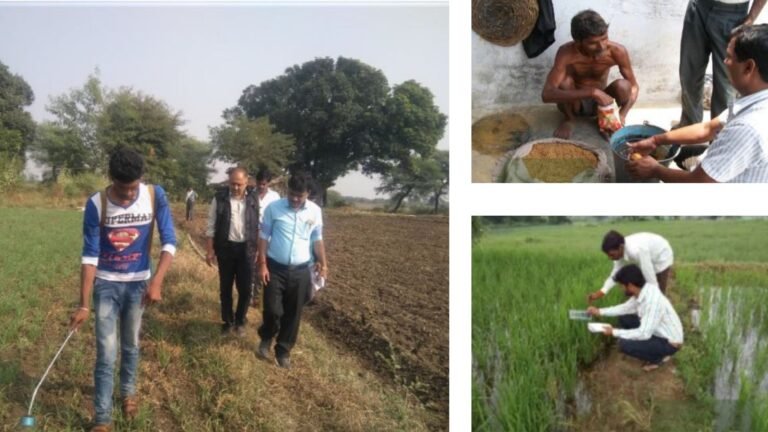
BMSS implements an agriculture-centric livelihood model that integrates training, demonstration, and field-level support to enhance farm productivity and income. The program targets marginal and small farmers across various regions of Chhattisgarh, where agriculture serves as the backbone of the local economy.
The organization has a strong track record of transferring appropriate and advanced agricultural technologies to thousands of farmers. Through structured training sessions, farmer group meetings, and field schools, BMSS ensures that knowledge is effectively disseminated and adopted at the grassroots level.
Crop demonstrations are a key component of the program, allowing farmers to observe the practical benefits of improved techniques. These demonstrations build confidence and accelerate the adoption of new practices, leading to better outcomes at the farm level.
BMSS also facilitates linkages with government initiatives such as the Soil Health Card Scheme, enabling farmers to access technical support and institutional resources. This integrated approach ensures that interventions are both effective and sustainable.
Sustainable Agriculture & Climate-Resilient Farming
Sustainable agriculture is at the core of BMSS’s livelihood strategy. The organization recognizes that long-term productivity depends on maintaining soil health, conserving natural resources, and adapting to changing climatic conditions.
BMSS promotes practices that reduce dependency on chemical inputs and encourage the use of organic and bio-based alternatives. Farmers are trained in water management, soil conservation, and efficient resource utilization to improve productivity while minimizing environmental impact.
Climate variability poses significant risks to agricultural livelihoods. BMSS addresses this challenge by promoting adaptive farming practices that enhance resilience and reduce vulnerability. By equipping farmers with the knowledge to respond to changing conditions, the organization helps ensure stable and sustainable income streams.
Soil Health, Seed Treatment & Scientific Farming Practices
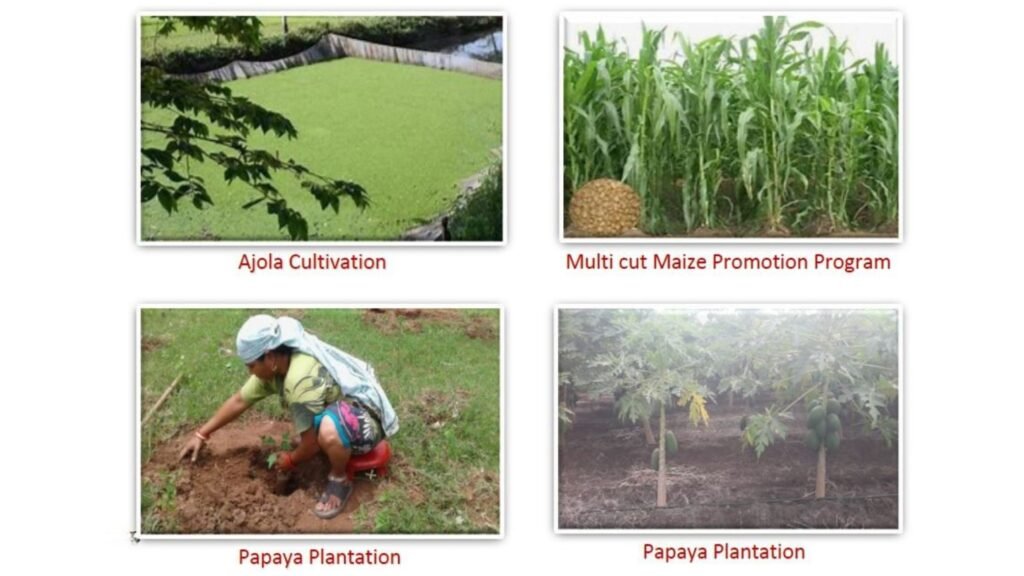
Improving soil health is a fundamental aspect of increasing agricultural productivity. BMSS actively promotes soil testing as a critical tool for understanding nutrient deficiencies and optimizing fertilizer use.
The organization supports farmers in collecting soil samples and accessing Soil Health Card services through linkages with government departments. Based on the results, farmers are trained to apply fertilizers in appropriate quantities, reducing costs and preventing soil degradation.
Seed treatment is another important intervention area. BMSS educates farmers on techniques that improve germination rates, protect crops from diseases, and enhance overall yield.
Practical training ensures that farmers can implement these methods effectively.
In addition, BMSS promotes integrated approaches to nutrient and pest management, encouraging the use of bio-fertilizers, organic inputs, and environmentally friendly pest control methods. These practices contribute to both productivity enhancement and sustainability.
System of Rice Intensification (SRI) & Productivity Enhancement
Paddy cultivation is a key livelihood activity in Chhattisgarh, and BMSS has introduced the System of Rice Intensification (SRI) as a transformative approach to improving productivity. SRI focuses on optimizing planting techniques, water usage, and soil management to achieve higher yields with lower input costs.
Farmers are trained on the principles of SRI, including proper spacing, reduced seed usage, and efficient irrigation practices. These methods result in stronger plant growth, improved soil aeration, and higher productivity.
BMSS has facilitated the adoption of SRI among a large number of farmers, covering significant agricultural areas. The approach has demonstrated clear benefits in terms of increased yield and reduced cost of cultivation, making it a sustainable and scalable solution.
Integrated Nutrient & Pest Management (INM & IPM)
BMSS promotes Integrated Nutrient Management (INM) and Integrated Pest Management (IPM) as essential components of sustainable farming. These practices focus on optimizing resource use while minimizing environmental impact.
Farmers are trained to use a balanced mix of organic inputs, such as vermicompost and bio-fertilizers, along with controlled use of chemical fertilizers. This approach improves soil fertility and ensures long-term productivity.
IPM techniques help farmers manage pests through biological and mechanical methods, reducing reliance on chemical pesticides. These practices not only lower input costs but also contribute to healthier crops and safer farming environments.
Livestock Development & Cattle Management
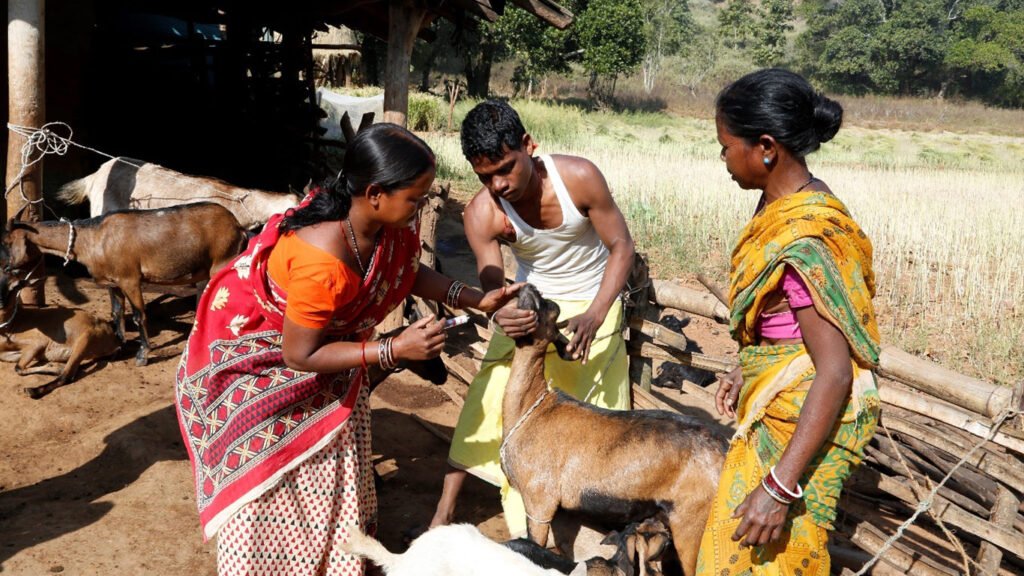
Livestock serves as an important supplementary source of income for rural households. BMSS integrates livestock development into its livelihood program to enhance income diversification and financial stability.
The organization provides training on improved cattle management practices, including feeding, breeding, housing, and disease prevention. Farmers are educated on maintaining proper hygiene, ensuring balanced nutrition, and following vaccination schedules.
BMSS also organizes vaccination camps in collaboration with livestock departments, ensuring access to essential veterinary services. These interventions improve livestock productivity and provide an additional income stream for farmers.
High-Value Crop Promotion & Income Diversification
With shrinking landholdings and increasing costs, traditional farming alone is often insufficient to sustain livelihoods. BMSS addresses this challenge by promoting high-value crop cultivation as a strategy for income diversification.
Farmers are trained to cultivate crops that offer higher market returns with relatively lower input costs. The organization provides guidance on crop selection, cultivation techniques, and market-oriented production practices.
This approach enables farmers to maximize income from limited land resources and reduces dependency on a single crop, thereby minimizing risk and enhancing financial stability.
Farmer Training, Field Schools & Demonstration Models
Capacity building is a critical component of BMSS’s livelihood development strategy. The organization conducts regular training programs, farmer meetings, and field schools to ensure effective knowledge transfer.
Field demonstrations allow farmers to observe improved practices in real-time, reinforcing learning and encouraging adoption. These models serve as practical examples of how scientific methods can enhance productivity and income.
BMSS also promotes peer learning through group interactions, enabling farmers to share experiences and adopt best practices collectively.
Implementation Model & Value Chain Support
BMSS follows a structured implementation model that ensures systematic delivery and measurable outcomes. The process begins with identifying key challenges, followed by technology transfer, training, and continuous support.
The organization facilitates linkages with government departments for access to schemes, technical guidance, and input support. BMSS also focuses on strengthening value chain components, including post-harvest management, storage, and market access.
This integrated approach ensures that improvements in production are translated into higher income for farmers.
Future Roadmap & Livelihood Expansion Strategy
BMSS aims to scale its livelihood development initiatives to reach more communities and enhance impact. The organization plans to expand its focus on sustainable agriculture, climate resilience, and income diversification.
Future strategies include strengthening value chain linkages, introducing advanced agricultural technologies, and building partnerships with government and corporate stakeholders. BMSS is also exploring innovative approaches to improve efficiency and scalability.
Donate to BMSS
(Berojgar Mahila Sewa Samiti)
Eligible for tax exemption under Section 80G of Income Tax Act
🇮🇳 Donate from India (80G Tax Benefits Available)
- ₹2,000 supports skill training for one woman
- ₹5,000 helps organize a community health camp
- ₹10,000 contributes to livelihood and rehabilitation of vulnerable groups
👉 For higher contributions or partnership opportunities, connect with us at manorama@bmss.org.in
Donate Now (India)All donations to Berojgar Mahila Sewa Samiti (BMSS) programmes are eligible for 50% tax exemption u/s 80G of the Income Tax 1961
*After donation, must submit your PAN Card number at this email: manorama@bmss.org.in
Give Beyond Borders

BMSS is FCRA registered and authorized to receive international donations
🌍 Donate from Outside India (FCRA Approved)
- $50 supports essential healthcare services
- $100 enables skill development and training programs
- $500 helps scale livelihood and rehabilitation initiatives
👉 For large donations or implementation partnerships, email us at manorama@bmss.org.in
Donate Now (International)By contributing to BMSS, you invest in a future where women are empowered to reach their full potential, and enable them to live with dignity and respect.